How do I start TNR in my neighborhood?
The first step is to contact this great nonprofit organization. They lend humane traps, schedule clinic appointments for sterilization surgery and offer instruction and assistance.
The Spay Neuter Hotline TNR Program at 602-265-7729
If you require additional assistance after speaking with them, please contact us. We are happy to provide you with educational flyers or to speak with your community.
OMG! It’s Kitten Season!!
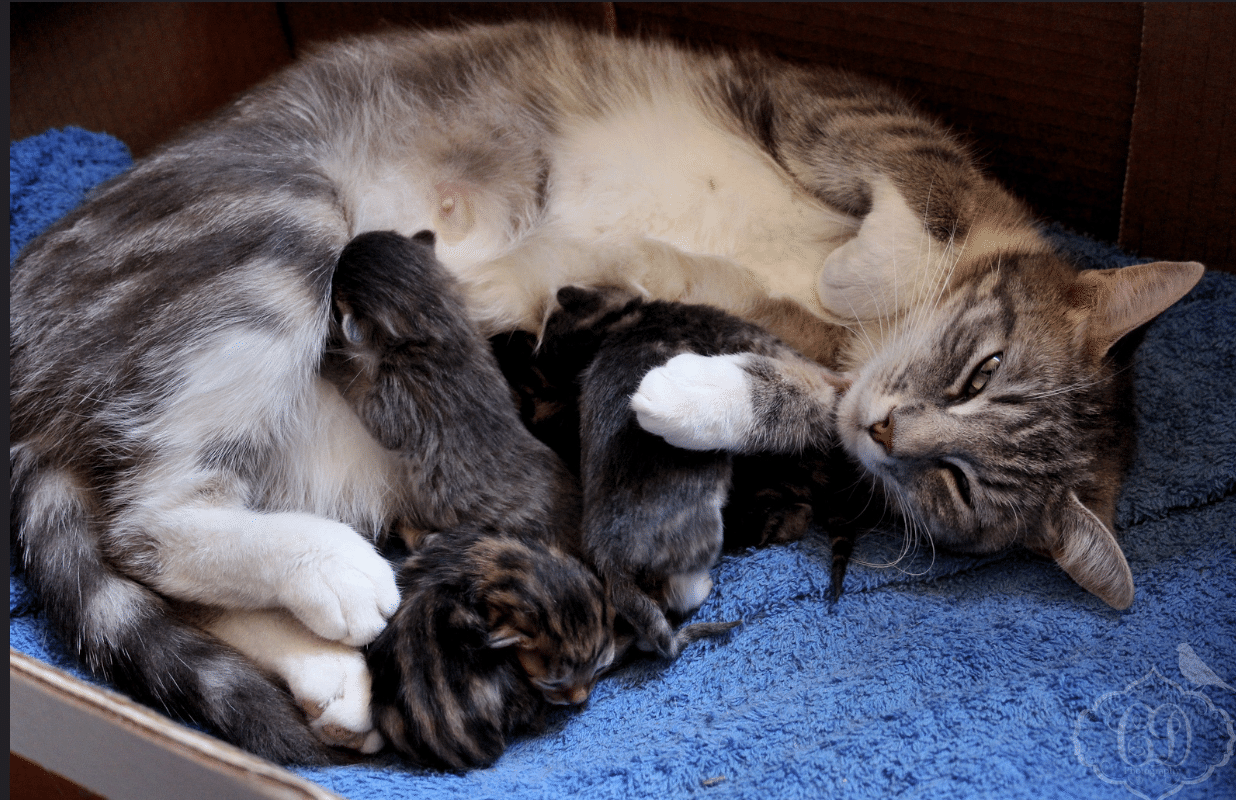
The weather is getting warmer, flowers are starting to bloom, spring training will begin soon and…..OMG! It’s Kitten Season!!
- If you find kittens who are alone, determine if the mother has abandoned them or if she is just off looking for food. The only way to find this out is to wait. Often times, she will return within a few hours. Observe from a distance or a hidden spot to be sure she is not returning before moving the kittens. Use common sense and be patient.
- If the mother is unsocialized to humans and you cannot handle her and the kittens are too young to be separated from her, the best thing for the family is to leave them where they are for now as long as the location is safe. Remember, the mother is best able to care for her kittens. Provide food, water, and shelter. Monitor the family daily and make the environment as safe for them as you can.
- Unweaned kittens turned into open intake shelters without their mothers are often killed. If there are no foster homes that will bottle feed the kittens, most intake shelters do not have the resources to care for neonatal kittens.
- March is the month of the year where we see the largest number of pregnant cats.
Did you know?
- Cats can go into”heat” as early as 3-4 months old.
- Heat means reproductive maturity.
- Breeding season is NOW. We see more pregnant cats in March than any other month.
- Cats can breed up to 4 times per year with 3-6 kittens in each litter.
- Our local animal care facility is filling with unwanted cats and kittens.
- Sadly, many healthy cats and kittens will be killed just because of limited room in shelters or the cats are deemed unadoptable due to lack of socialization with humans.
The Foundation For Homeless Cats is a proud partner of People Saving Pets
People S
aving Pets is an exciting campaign that uses positive and uplifting advertising, public relations and community events to educate and engage the public, change perceptions about pet homelessness and increase pet adoptions and spay/neuter surgeries. It is designed to inspire action to save the lives of homeless pets. By highlighting the efforts of national and local animal-welfare partners, the campaign will inspire a broad range of public participation. With advertising that focuses on the human-pet bond, People Saving Pets will showcase the ways that pets enrich our lives and will provide information and education about the ways to end the tragedy of euthanasia. The campaign encourages people to spread the word about the campaign and its goals. Members of the public can participate in People Saving Pets in a number of ways – from joining as a member, attending local pet-themed events, donating time or money, buying official People Saving Pets merchandise, adopting a pet and spaying/neutering your pet.
In loving memory of Bertha
I am sad to report we lost Bertha this on November 19 2010. I met Bertha about 6 years ago as I was on my usual route of feeding my managed colonies. Suddenly, on the dark street was this little gray cat near the side of the road flagging me down. I stopped and with a delicate Meow, she asked me to feed her. How did she know I was a cat woman?
I opened a can for her and she devoured the liver and chicken. I came back the next day and the next day and of course continue to this day.
Bertha lived at a steel manufacturing plant in North Phoenix along with 9, now only 8, other cats. This is a 100% sterilized colony. No kittens have been born there in 5 years.
Bertha proved to be a formidable opponent and it took me numerous attempts to humanely trap her for spay surgery, only to find out she had already been fixed. She must have been abandoned. Perhaps she had a loving home at some point.
I just happened to drive by there Friday on my way home from work and found my dear Bertha lying motionless. I scooped her up and took her to down the street to my friend’s business. He is a cat person too. She was still alive, but barely. It was a sad joy to stroke her and tell her she was loved before she passed over the rainbow bridge. There was not time to get her to a hospital.
She was not my cat; she was not your cat. That is what people often say about these free roaming/feral cats. But I was her guardian and I and the other cats miss her greatly.
This is why we do Trap Neuter Return. We want to keep free roaming/feral cats out of municipal shelters, where they are almost always killed, and to prevent additional births. Maybe one day there will be no Berthas, abandoned and homeless.
“I know I cannot save every cat, but if I can spay or neuter every cat I meet and educate others to do the same, then I know I am saving 1000’s.”
Our own founder, Carla Jewell, received the Puffer Award on October 14 2010
Not only did Carla receive the Puffer Award, but she was awarded the 2010 Puffer Person of the Year Award! The Puffer Award honors volunteers who have worked tirelessly to keep free-roaming, abandoned, and/or feral cats out of shelters in Maricopa County. The number one cause of death of cats in Maricopa County and the United States is euthanasia in municipal shelters. In fact 72% of all cats coming into shelters are euthanized, only 23% are adopted, and just 2% are reunited with their owners. 100% of feral cats are killed, as they are deemed unadoptable. Carla, as Director of The Foundation For Homeless Cats, has saved over 500 cats from entering the municipal shelter in 2010.
Some achievements:
• Assisting disabled and low-income caregivers with spay/neuter of community cats
• Working with local municipalities, such as Mesa, Scottsdale, Peoria and Glendale to implement Trap Neuter Return (TNR) programs for their communities
• Hosting workshops for the Phoenix Police Department about the link between animal cruelty and domestic violence, elder abuse, child abuse and violent crime
• Offering TNR presentations for HOA’s and community neighborhood associations
We are so proud of Carla winning the award and we think she is the Cat’s MEOW!

Stray, Feral, Abandoned, Homeless, Nuisance
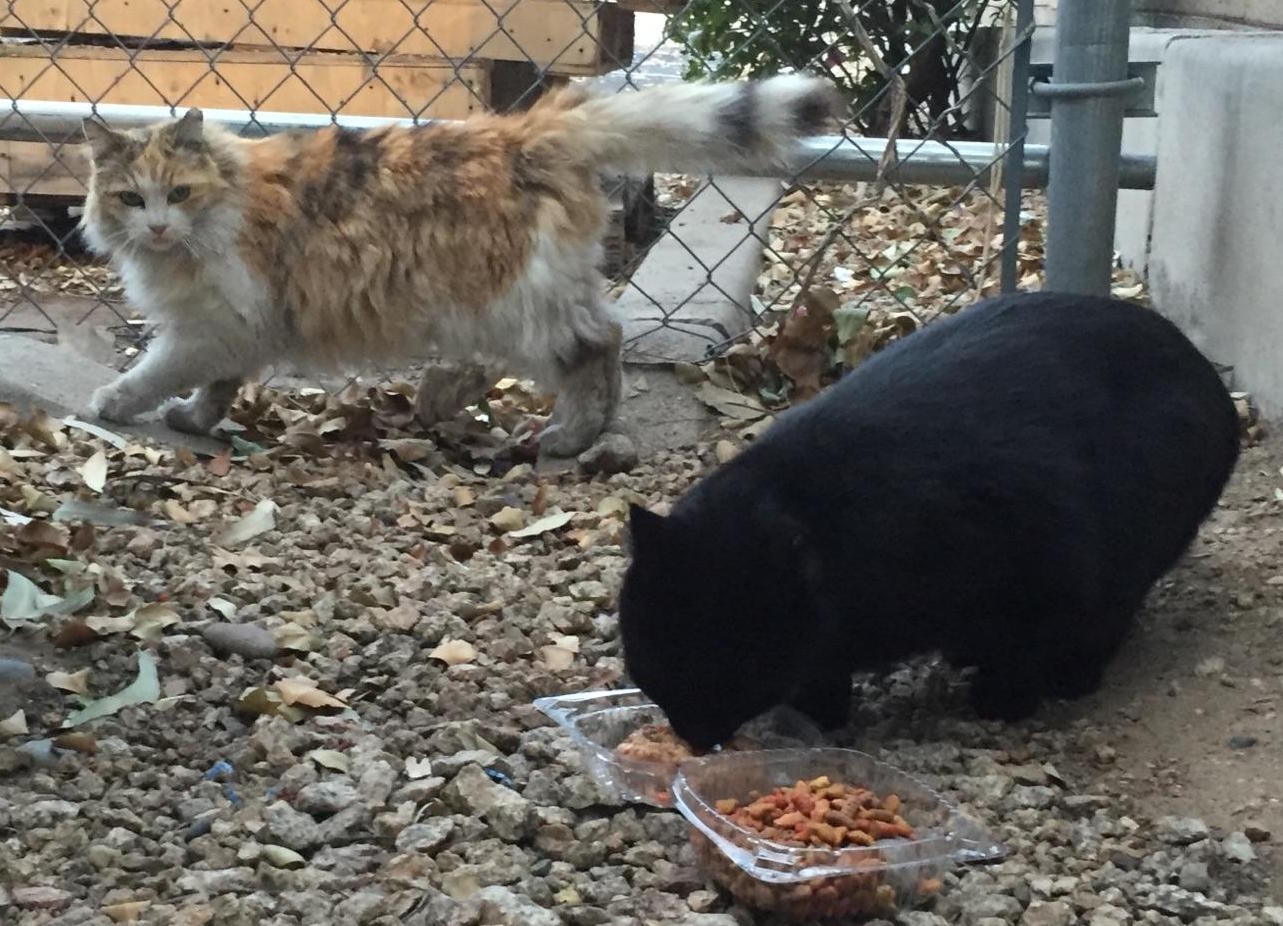
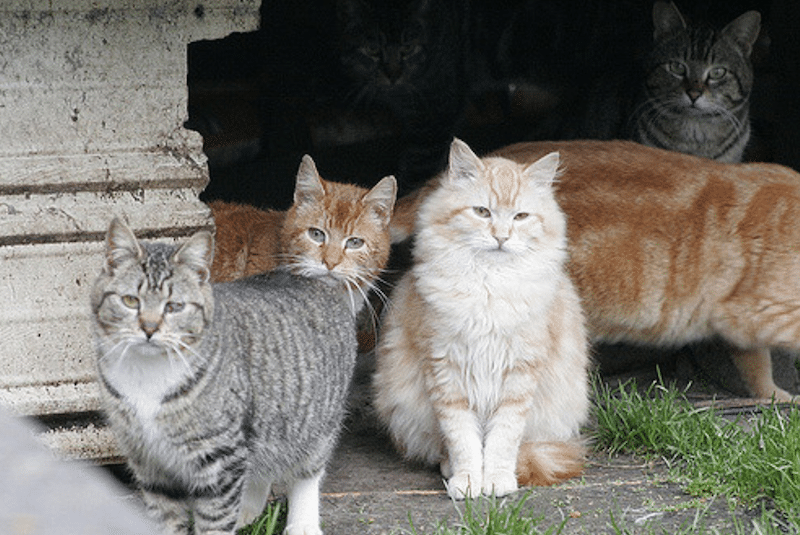
This is how many describe the cats they see roaming freely. They are not my cats, they are not your cats. They are the product of someone else’s irresponsibility-primarily the result of pet owners’ abandonment or failure to spay and neuter their animals, allowing them to breed uncontrolled. Cat ‘colonies’ can be found behind shopping areas or businesses, in alleys, parks, abandoned buildings, and rural areas.
What is your current cat management protocol? If you do not have one, you probably do not know what to do, and doing nothing is certainly not a solution.
We advocate TNR (trap, spay/neuter, return) programs to implement effective nonlethal cat management.
You may love cats.
You may loathe cats.
Either way, you have probably come to same conclusion- there are too many cats!
In fact, in the United States we are euthanizing approximately 500 cats each hour and we have been doing that for over 20 years. So is this a solution?
No, if it were there would be no feral cats!
So what can you do to help end the over population of cats in your community?
First and foremost, spay or neuter your pet cat. Find low cost options in Arizona at The Spay Neuter Hotline
Reduce the amount of free-roaming cats in your neighborhood by implementing a cat management plan of TNR and maintain a neutered, managed colony.

Signup for our Mewsletter!